10.5.18

How Do I Begin Organic Fertilizer Production?

Organic fertilizer production will be profitable in the near future because organic farming develops rapidly in the global!
1. Conduct Detailed Research
Starting an organic fertilizer manufacturing company is not one of those businesses that can be started without proper research and study of the industry. It is important that you conduct detailed research in order to find out all it will take for you to be able to setup an organic fertilizer manufacturing company and how to leverage on the existing market to sell your products and also how to create new market channels. As a matter of fact, if you want to sell your organic fertilizer in the US, then you must ensure that it does not contain traces of toxic metals.

25.12.17

5 More Ways to Invest in Brazil Right Now

Earlier this year, Brazilian incumbent Dhilma Rousseff won re-election as president of the country boasting Latin America's largest economy. At the time we asked, "Is It Time to Invest in Brazil?"
The thesis was simple enough. Despite a halt to the double-digit growth seen before the financial crisis, Brazil is still home to a near 100 million-person-strong middle class. It is governed by a mature democracy. It is absolutely loaded with natural resources. Taking a long-term view, the future looks quite bright for this sleeping giant.
Investing in foreign markets isn't always easy
The challenge for investors here in the U.S. is finding an appropriate vehicle for investing in the Brazil markets. In the previous post, we mentioned Petrobras, Brazil's massive, state controlled oil company, the home building company Gafisa S.A., and the largest diversified ETF, the Shares MSCI Brazil Index Fund.

EFB Fiber Crushing Machine for EFB Fiber Processing


Turning palm oil mill waste into organic fertilizer, Utilizing Palm Oil Organic Waste

6.11.17

New fisheries firm expected to set up fish feeds factory in Kigali

The Government has leased management and operationalisation of Urban Fisheries Products Promotion Centre, a move officials say will ensure proper handling of fish produce, market access and, most importantly, address the issue of lack of enough nutritious fish feeds, which has been a major concern for the sector.
Under the 10-year lease deal, AQUAHORT Export Ltd/AEL, will be expected to put in place a fish feed factory with capacity to produce five tonnes of fish feeds per day.

24.8.17

Large-scale compost operation riles neighbors in Northboro


NORTHBORO – A two-year-old ban on disposal of large amounts of commercial food waste from getting into the state’s solid waste stream may be producing some unintended consequences, but top state officials who may be able to resolve the problems are saying little to allay fears of farmers and homeowners affected by the ban.


9.8.17

Windrow composting

Windrow composting is a very well established technology for dealing with food & kitchen waste, agricultural & green wastes, and also Municipal Solid Waste (MSW). The material is shredded and then piled in elongated rows (windrows) and aerated through either turning of the windrows or by forcing air through the material. Windrow composting may take place in buildings or externally.

-Long, narrow piles agitated/turned regularly.
-Aeration by natural/passive air movement.
-Better suited to larger volumes.
-Composting time: 3 - 6 Months.

Mobile equipment is needed.
-Grinder/Shredder
-Tractor/FEL
-Windrow Turner
 ·tractor-pulled
 ·self-propelled compost turner
-Rotary Screener
Manual labor costs excessive without equipment.


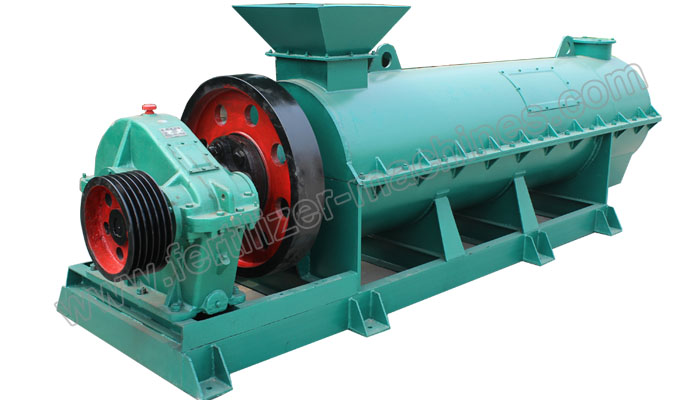
Production of high-quality organic granulated fertilizer

Production of high-quality organic granulated fertilizer is a complex task as the process is subject to various factors: variety and quality of raw materials, composition and compatibility of material formulation, moisture content and its variation during the organic fertilizer granulation process, quality and degree of abrasion of the operating parts of the grinder and the granulator used, correct selection and setting of equipment operating modes, etc. This means that producers of organic granulated fertilizers need to take into account all the elements and stages of the technological process of granulation. In a competitive market, this cannot be overlooked or ignored. In the granulation process, there are several factors affecting the quality of the final (new) product. Some authors claim the quality of granulated product is mostly affected by the composition of granules (20 %), pressing quality 15 %, material shredding parameters up to 20 %, additional processing approximately 40 %, as well as the drying cooling process.

It is indisputable that part of soil fertility improvement is organic fertilizer. The main source of organic fertilizer remains livestock waste – cattle and poultry manure. Whereas scarcely used, when the price of mineral fertilizer increased and ecological problems appeared, a decrease of soil fertility and humus has been noticed. When applying conventional manure removal, preparation and application methods in addition to not using stricter environmental requirements can have a negative impact on the key components of the environment. This can be prevented by properly wasting, composting and granulating agricultural waste. The resultant product is humus compost, which presents no problems and no the difficulty of keeping it and has no unpleasant odor, pathogenic organisms or other fitotoxical materials, it also accelerates the metabolism of nutrients between the soil and plant roots of plants. 


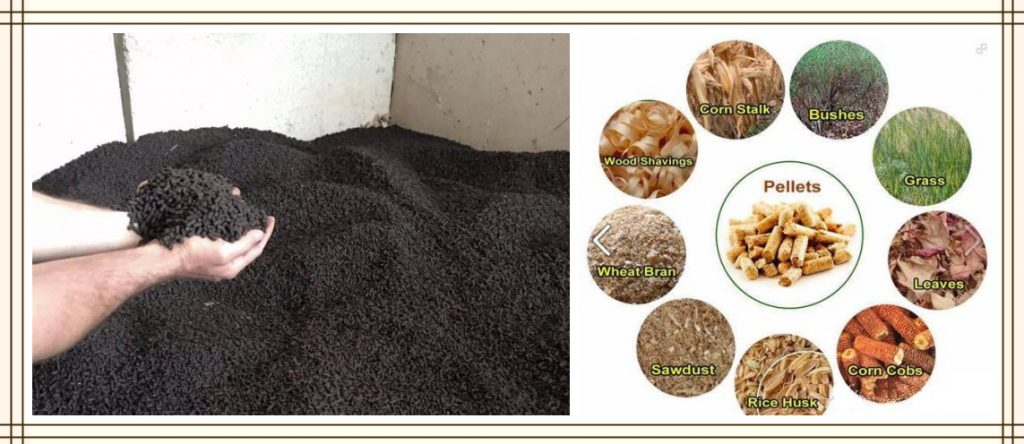
Organic granular fertilizer improves the dynamics of microbiological processes in granules and around them which allows reducing the spread of nutrients in the soil and their transition to less agile forms, besides that it results in better circumstances for processes taking place between the fertilizer, soil and plant. Granular manure is a universal complex organic fertilizer containing all the macro and micro elements. Pelleted manure nutrient content for soil micro flora is optimal; moreover, it quickly dissolves in water and is easily absorbed by plants. Granular manure can be called concentrated fertilizer, because the recycling process reduces the volume of material more than 10 times, due to water removal and material thickening while extruding. Granulation – the set of natural and physical-mechanical processes, which take place during the formation of little pieces, which has a dimension of the ranges, forms, structures and physical properties. Granulation allows significant simplification of the storage, transport and dosage; moreover, it increases powdery while together eliminating dusting and improving the working conditions in the production sphere, besides that, it can regulate the granule structure and related properties. The granulation process efficiency depends on the method of granulation and technology. 

The consequence of all physical-mechanical processes that are taking place while pelleting is that granulated material density increases. In the manure pellets making process we can see all known physical-mechanical and physical-chemical bonds, accompanied by such forces as the capillary force and forces between the solid particles, temperature changes affecting the forces and so on. The granulation process itself depends on the feedstock grain size and physical-mechanical properties. (Temperature, moisture content, pH, etc.). The main parameter describing the performance of pelletizer and the energy cost required by material compaction is the granule formation speed. As the speed of granulation increases the granular material density and mechanical strength decrease. 

More Resources:
compound fertilizer granulation process
how to convert food waste into organic fertilizer