The Basque Institute for Agricultural Research and Development, Neiker-Tecnalia, and the Guipuzkoa-based company Ekonek will be building a pilot plant to treat organic waste for producing organic fertilizers. The facility will enable the organic material resulting from biogas plants to be effectively put to use. The plant will be located on Neiker-Tecnalia’s agricultural land in Arkaute (Álava, Basque Country) in northern Spain. The budget of EUR 1.5 million ($1.96 million) will be provided by the European Union within the framework of a CIP-Ecoinnovation project, and four organisations will be participating in the initiative: Neiker-Tecnalia, Ekonek Innovation in Product Upgrading, Blue Agro, and the Dutch company Colsen.
Starting an organic fertilizer manufacturing company is not one of those businesses that can be started without proper research and study of the industry. It is important that you conduct detailed research in order to find out all it will take for you to be able to setup an organic fertilizer manufacturing company and how to leverage on the existing market to sell your products and also how to create new market channels. As a matter of fact, if you want to sell your organic fertilizer in the US, then you must ensure that it does not contain traces of toxic metals.
Earlier this year, Brazilian incumbent Dhilma Rousseff won re-election as president of the country boasting Latin America's largest economy. At the time we asked, "Is It Time to Invest in Brazil?"
The thesis was simple enough. Despite a halt to the double-digit growth seen before the financial crisis, Brazil is still home to a near 100 million-person-strong middle class. It is governed by a mature democracy. It is absolutely loaded with natural resources. Taking a long-term view, the future looks quite bright for thissleeping giant.
Investing in foreign markets isn't always easy
The challenge for investors here in the U.S. is finding an appropriate vehicle for investing in the Brazil markets. In the previous post, we mentionedPetrobras, Brazil's massive, state controlled oil company, the home building companyGafisa S.A., and the largest diversified ETF, the Shares MSCI Brazil Index Fund.
The Government has leased management and operationalisation of Urban Fisheries Products Promotion Centre, a move officials say will ensure proper handling of fish produce, market access and, most importantly, address the issue of lack of enough nutritious fish feeds, which has been a major concern for the sector.
Under the 10-year lease deal, AQUAHORT Export Ltd/AEL, will be expected to put in place a fish feed factory with capacity to produce five tonnes of fish feeds per day.
NORTHBORO – A two-year-old ban
on disposal of large amounts of commercial food waste from getting into
the state’s solid waste stream may be producing some unintended
consequences, but top state officials who may be able to resolve the
problems are saying little to allay fears of farmers and homeowners
affected by the ban.
Windrow composting is a very well established technology for dealing withfood & kitchen waste, agricultural & green wastes, and also Municipal Solid Waste (MSW). The material is shredded and then piled in elongated rows (windrows) and aerated through either turning of the windrows or by forcing air through the material. Windrow composting may take place in buildings or externally.
-Long, narrow piles agitated/turned regularly. -Aeration by natural/passive air movement. -Better suited to larger volumes. -Composting time: 3 - 6 Months.
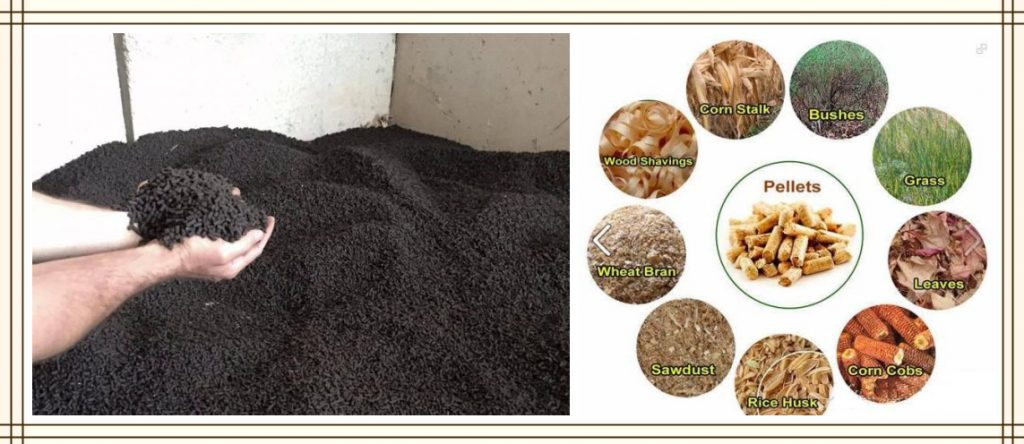
Production of high-quality organic granulated fertilizer is a complex task as the process is subject to various factors: variety and quality of raw materials, composition and compatibility of material formulation, moisture content and its variation during the organic fertilizer granulation process, quality and degree of abrasion of the operating parts of the grinder and the granulator used, correct selection and setting of equipment operating modes, etc. This means that producers of organic granulated fertilizers need to take into account all the elements and stages of the technological process of granulation. In a competitive market, this cannot be overlooked or ignored. In the granulation process, there are several factors affecting the quality of the final (new) product. Some authors claim the quality of granulated product is mostly affected by the composition of granules (20 %), pressing quality 15 %, material shredding parameters up to 20 %, additional processing approximately 40 %, as well as the drying cooling process.
It is indisputable that part of soil fertility improvement is organic fertilizer. The main source of
organic fertilizer remains livestock waste – cattle and poultry manure. Whereas scarcely used, when
the price of mineral fertilizer increased and ecological problems appeared, a decrease of soil fertility
and humus has been noticed.
When applying conventional manure removal, preparation and application methods in addition to
not using stricter environmental requirements can have a negative impact on the key components of
the environment. This can be prevented by properly wasting, composting and granulating agricultural
waste. The resultant product is humus compost, which presents no problems and no the difficulty of
keeping it and has no unpleasant odor, pathogenic organisms or other fitotoxical materials, it also
accelerates the metabolism of nutrients between the soil and plant roots of plants.
Organic granular fertilizer improves the dynamics of microbiological processes in granules and
around them which allows reducing the spread of nutrients in the soil and their transition to less agile
forms, besides that it results in better circumstances for processes taking place between the fertilizer,
soil and plant.
Granular manure is a universal complex organic fertilizer containing all the macro and micro
elements. Pelleted manure nutrient content for soil micro flora is optimal; moreover, it quickly
dissolves in water and is easily absorbed by plants. Granular manure can be called concentrated
fertilizer, because the recycling process reduces the volume of material more than 10 times, due to
water removal and material thickening while extruding.
Granulation – the set of natural and physical-mechanical processes, which take place during the
formation of little pieces, which has a dimension of the ranges, forms, structures and physical
properties. Granulation allows significant simplification of the storage, transport and dosage;
moreover, it increases powdery while together eliminating dusting and improving the working
conditions in the production sphere, besides that, it can regulate the granule structure and related
properties.
The granulation process efficiency depends on the method of granulation and technology.
The
consequence of all physical-mechanical processes that are taking place while pelleting is that
granulated material density increases.
In the manure pellets making process we can see all known physical-mechanical and physical-chemical
bonds, accompanied by such forces as the capillary force and forces between the solid particles, temperature changes affecting the
forces and so on.
The granulation process itself depends on the feedstock grain size and physical-mechanical
properties. (Temperature, moisture content, pH, etc.). The main parameter describing the performance
of pelletizer and the energy cost required by material compaction is the granule formation speed.
As the speed of granulation increases the granular material density and mechanical strength decrease.
Organic fertilizer (biological) granulator
is in round configuration to make cylindrical particles a rolling ball,
no return, high rate of ball granule, good strength, beautiful and
applicable, and hence the machine becomes the ideal equipment of
globular particles in organic fertilizer (biological). India is a large
agricultural nation, there is lots of organic fertilizer, and many
villagers do not know how the rational use of fertilizers, resulting in a
lot of waste. So the demand for granulators is big. We are all know the modern organic fertilizer is produced by organic fertilizer equipment, the organic fertilizer production
has been mechanized, large-scale, integrated processing, below we went
into the production process of organic fertilizer equipment. The way of traditional organic fertilizer pelletizing is mainly through the disc for molding. Disc Pelletizer
through high speed revolves result the raw materials rolling in balls.
On the process of the molding, you need add some water to increase the
rate of shaping. So the organic fertilizer pellets would be a little
more loose, not hard, easy to broken and out of shape, This would bring some unnecessary risks on product organic fertilizer. The
production of organic fertilizer according to the organic fertilizer
functional effects decision, workers then first a variety of raw
materials required pulverized into a certain degree of fineness of
organic materials, in accordance with Formulation in a blender Hunban,
in this process, the key step is proportion to add a 'bio-fermentation
agents, Hunban into the fermentation tank, so the area is very small,
deep pool aerobic fermentation, the fermentation process without manual
saves fermentation costs due to full mechanization production,
fermentation so evenly, no dead ends, from the process to ensure product
quality organic fertilizer. After one night, the raw material input
temperature soon rose up, up to 70 degrees, this time, the staff start
turning throwing equipment, at the same time open the blast equipment,
to be turned toss after the end of the pond is already fermented
finished, new raw materials into the fermentation tank, and so the
cycle. Organic fertilizer granulator equipment
to show the production process, to understand and know how it carried
out the production of organic fertilizer, it helps to fully play its
fertilising application of organic manure.
Conventional methods of growing crops can produce up to 25 percent
more food than organic methods for cash crops such as wheat and corn.
Why then would anyone want to use organic fertilizer? Organic fertilizer
consists of natural materials from the remains of a once-living
organism or the by-products of an organism. Organic fertilizers provide a
steady release of nutrients for a very long time. Also, almost any organic material can be used as a fertilizer, though
the effectiveness of each will vary considerably. Unlike inorganic
fertilizers, living organisms eat organic matter in natural fertilizers,
which helps break down nutrients for plants to consume. They also allow
the soil to better hold moisture while promoting proper drainage. While
chemical fertilizers can sometimes not work on dead soil, organic
fertilizers help build nutrients that naturally replenish the soil, and
healthier soil leads to greater nutrition. Soil that is fertilized with inorganic materials will eventually die
as commercial fertilizers contain only enough nutrients to keep the
plants growing. As the soil begins to die, it is necessary to add even
more fertilizer to maintain the same nutrient levels to preserve the
plants. A study published in the May 2002 edition of Science revealed that
using organic fertilizer can cut down on the amount of fertilizer needed
by 34 to 53 percent, while reducing the need for pesticide use up to 97
percent. Commercial fertilizers are also filled with toxic chemicals that leak
into the water supply. They can poison local wildlife, kill surrounding
soil, and endanger the safety of those who live nearby. In fact, the
National Institutes of Health published a warning on plant fertilizer
poisoning due to high levels of nitrates. You can become infected not only by accidentally consuming them, but
also by regularly coming into contact with conventional fertilizers. If
you are a farmer or like to spend time in your food garden, this could
be a health and safety concern for you and your family. If you touch conventional fertilizer, you may experience burning
skin. If you consumed it by accident, you may experience an upset
stomach, pain in your abdomen, dizziness or shortness of breath. Organic
fertilizers, on the other hand, may sometimes smell putrid, but they
replenish soil, feed small organisms, and are safe to use. More Resources: 1. Organic Fertilizer Manufacturing Process 2. Small Scale Organic Fertilizer Plant Layout 3. Organic Fertilizer Production Line
Composting is an ancient art, as old as seed gathering and cave painting. Clay tablets from Mesopotamia dating back 1,000 years before Moses discuss the composting process. Composting was popular with the Greeks and Romans and was common farming practice in Europe and America before the chemical revolution of the 19th century. Beginning in 1905, the English agronomist Sir Albert Howard spent 30 years developing composting techniques in India, ideas which were then embraced by home gardeners in America thanks to the efforts of Organic Gardening editor J.J. Rodale and others.
Take your yard clippings for a spin! TheTumbleweed Compost Tumbleris a simple way to quickly turn yard and food waste into a homegrown soil amendment, quickly and cleanly. Drop the materials in, turn them a few times per week, and in months — not years — you’ll have gallons of nutrient-dense organic matter to offer your plants.
The first compost transaction — its transfer from party to party for trade or profit — is lost to history. The commercial sale of compost probably dates back to when some enterprising farmer began trading the fermented remains of his silage pile to a neighboring gardener for grain or produce. Colonial farmers of New England made a practice of throwing the surplus fish catch into piles of barnyard muck and it’s easy to think that some of the potent results were traded among growers who weren’t such able fisherman. Private, usually local commercial composting began on a small scale during the back-to-the-land movement of the 1970s (commercial humus, potting soils and such products as fish fertilizer have been around for decades). This practice grew as corporate farm operations, livestock growers, the timber industry and other businesses realized there was profit to be made from the waste of their activities.
As in Los Angeles, municipal compost operations started as an answer to rapidly filling landfill sites. Since leaves and yard wastes comprise such a large percentage of landfill volume, as much as 30 per cent depending on the season, many cities began to see the value of composting their green waste and recycling (Los Angeles reached 50 percent by including food, paper products and other soluble wastes).
The city of Davis, California has had such a program since 1972. Wellesley, Massachusetts began composting its leaves in the early 1970s after its community incinerator was closed for failing to meet air emission standards. At first, leaves were just piled and stored, but then the city began turning the huge piles and making finished compost and using it locally. Sales boomed. In the late ’80s, the town began collecting debris from landscapers and other commercial operations in an effort to triple their compost production. Other states began to see the win-win value of composting and passed laws to keep yard wastes out of landfills. Incentives were granted for backyard composting programs, subsidies were given to homeowners who purchased compost bins and cities were awarded funds for trucks that would vacuum up leaves.
As previously noted, the market potential determinations for both red grape skins and grape seed oil were based
on 100% utilization. These market potentials decrease when a large portion of the produced grape pomace is
used to create compost which is then recycled back into the vineyard.
Composting is based on aerobic microbial decomposition. Organic compounds are broken down (decomposed)
into natural elements such as carbon and nitrogen. This is a very simplified version of the composting process as
a multitude of factors are involved in composting biology and chemistry. For optimal composting, the material
being composted must have a high moisture content and contain a sufficient carbon-to-nitrogen (C:N) ratio. The
high C:N provides nutrients for the microbes to survive and continue degradation. A study
in 2001 provided the chemical characterization of fresh grape pomace, which is displayed in Table 15. The
chemical composition after composting is also displayed in Table 15, providing a before and after comparison of
grape pomace composting. The optimal initial C:N of a compost is between 25:1 and 35:1. As shown in Table 16, the C:N of grape pomace
is approximately 27:1, therefore it qualifies as an optimal substrate for composting. After composting, the
nitrogen content increased to 2.35 (wt%). This is beneficial as nitrogen content in soil is influential in determining vineyard growth.
The theoretical average amount of nitrogen needed for a vineyard is 55 kg N/ha. This is equivalent to 22.267 kg N/acre (1 ha = 2.47 acres). As
stated, the market potential of grape pomace as a suitable supplement decreases as increased pomace is utilized
as compost. Although composting grape pomace increases the nitrogen content, using composted grape pomace
alone to supply vineyards with nitrogen is neither feasible nor economical. To validate 1) due to the significant
amount of composted grape pomace needed to supply 22.267 kg N/acre and 2) the other nutrients needed for
vineyard growth, i.e., phosphorus, potassium and magnesium, are not adequately supplied by grape pomace
compost.
Our EFB composting system offers an effective solution to the oil palm industry's problem of waste disposal. The palm oil waste composting system utilizes 100% POME and EFB and uses a technically advanced method of converting waste matters into compost. Part of the process involve EFB shredding using a high speed hammer mill and then stacked into windrows of 1.5 meter high by 45 meter length in an open field. POME with BOD levels less than 10,000 ppm is then pumped from the pond and sprayed onto these windrows at a specified rate at 3 days intervals. The windrows are turned regularly using a windrow turner for better mixing and aeration. Composting accelerates are sprayed once at the start of the process to accelerate the composting process. Throughout the composting process, the windrows are covered by an air-permeable covering to avoid drenching by heavy rain and to prevent leaching of nutrients. The covering is crucial for the control of temperature and moisture content, two key factors that affect the speed of composting and quality if the end product. The compost is mature after 70 days and is ready for use. The compost, when used in sufficient quantity, is capable of replacing 66% of chemical fertilizers.
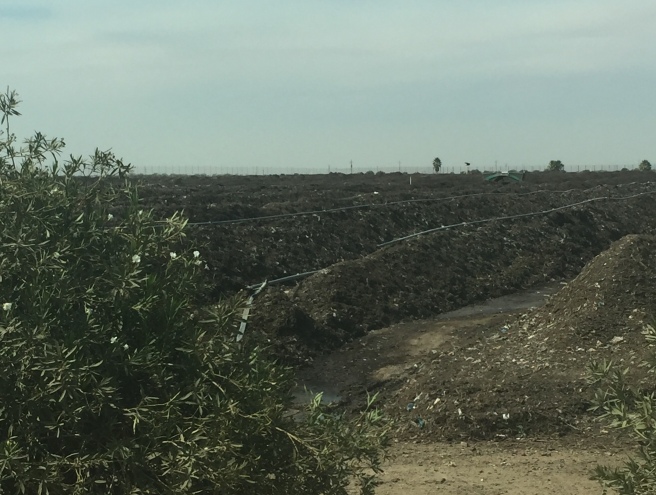
In the middle of farms and fields, south of Bakersfield CA, in the
small town of Lamont CA is one of the largest composting facilities in
the United States. Driving from downtown LA, it took me 2.5 hours to
make it out to the facility. Just like the surrounding farms, this
facility has rows and rows of crops – except this crop is compost.
Specifically, windrow composting – where heaps of organic waste,
organized into rows, sits for 4 months as it slowly turns into compost.
Windrow composting involves a few major steps: Collection, Feedstock
Preparation, Windrow Processing and, Screening.
Collection:
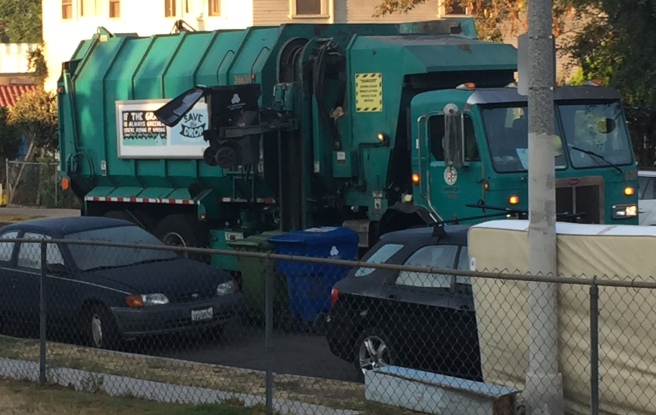
Before material even makes it to Lamont, it must be collected. It sounds
simple but complexities exist. Material originates not only from the
bin placed out at the curb in residential neighborhoods but from several
different sources and even that bin can be complex. Some residential
bins collect yard waste only while some collect yard waste & food
scraps. The composition or profile of the waste varies differently when
food scraps are added and changes depending on neighborhood.
Additionally, most of the waste comes from commercial and farm sources –
again with its own profile. All these sources arrive at the Lamont
facility via different pathways. Residential and some commercial
material is received at Recology’s Sun Valley MRF. Other commercial and
farm wastes arrive directly at the Lamont facility from various sources
(other MRFs, farmers truck it in themselves, etc.) Early morning collection in East Los AngelesFeedstock Preparation:
Successful composting starts with the Carbon to Nitrogen (C:N ratio) of
the feedstock. Yard trimmings have a high ratio and food waste has a
low ratio. Mixing brings the ratio within the ideal C:N ratio of
20-40:1. The Sun Valley MRF mixes the collected feedstock to be
composted at Lamont. see more information on COMPOSTABLE MATERIALS AROUND US
Windrow Processing:
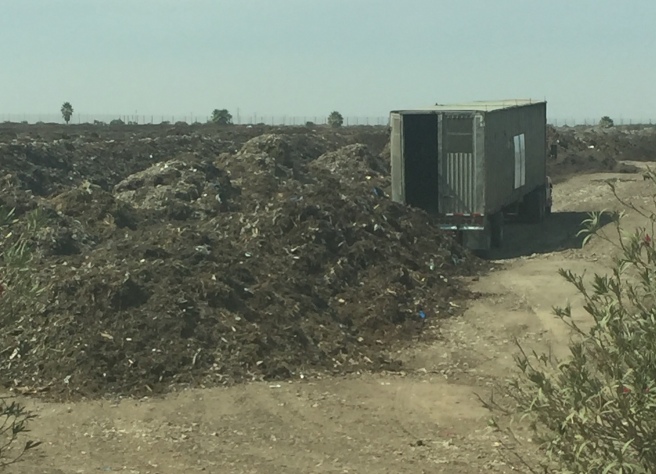
The Lamont facility is the largest permitted composting facility west
of the Mississippi. Every day, 150 tractor-trailers unload tons of
organics. The logistics behind such a large scale operation can seem
harrowing but the standard in large scale composting is to form windrows
– long rows of material dumped out of the back of the tractor trailer
and left in the field. Composting starts where the materials lies! Several truckloads make a completed windrow which can be a couple
hundred feet long. Once unloaded, the material must be covered with dirt
to contain any gasses. And the windrow must be watered – with an ideal
moisture content between 40-60%. The Lamont facility uses gray, filtered
but untreated water from the Lamont wastewater plant. In addition to
adding moisture, the water serves to further reduce the C:N ratio. Initially, the row is a lumpy mess but the material must be turned to
aerate the material. Aeration occurs every 3 days during the first 15
days, with a reduction in frequency after the first 15 days. To aerate, a
giant windrow turner straddles a row and churns the material as it
drives over the row. As the turner passes, the row is processed into a
neat pile. The entire composting process takes about 120 days. Throughout the
process, the temperature is measured o ensure pathogens are destroyed
and the compost is safe to use. Temperature is also a key insight into
how the composting process is performing. With windrow composting, the long processing time of 120 days
requires large amounts of land. In vessel composting is a popular
alternative in space constrained areas as it requires less space and
completes the process in a shorter amount of time with greater control
of environment for more precise conditions for composting.
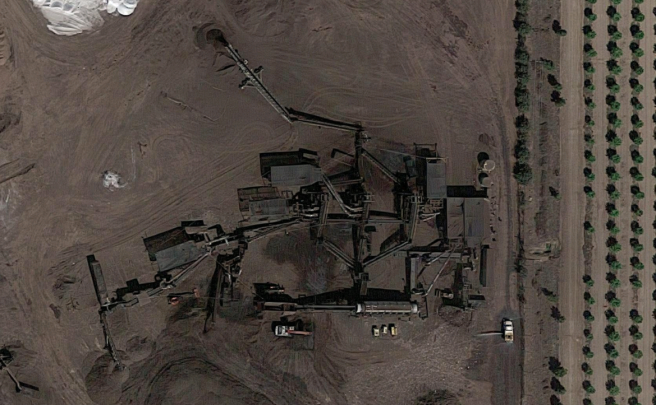
Screening: At
the end, most of the material will have processed into very small
particles. But, plastic bags, nails, large pieces of wood which didn’t
fully decompose will have to be removed. Material is loaded into a
hopper which screens out particles larger than about 4 inches. Then the
material is moved through a large rotating cylindrical tube with many
holes on an incline – called a trommel screen. Properly sized material
slips through the holes while oversized material continues to travel up
the trommel, ending in the overs bin. The overs are sent to landfill.
Prime material undergoes further screening: a magnet is passed over the
material to capture ferrous metals (mostly nails left in trees) and a
stream of air is passed through the material and into a vacuum to
capture any plastic film material. Prime compost is sold to surround
area farms. Screening at Blossom Valley (trommel screen is seen in bottom center of the equipment)
I initially thought compost was equivalent to dirt but the
classification is different. Compost is a soil amendment and is able to
provide nutrients and microbes which have been depleted during
traditional farming techniques. It also absorbs and retains much more
liquid than just soil alone. This is great for drought stricken areas
like the Central Valley, where the facility is located. The tour gave me
a much greater appreciation of what is involved in processing our
organics. The system is much more complex than people initially assume.
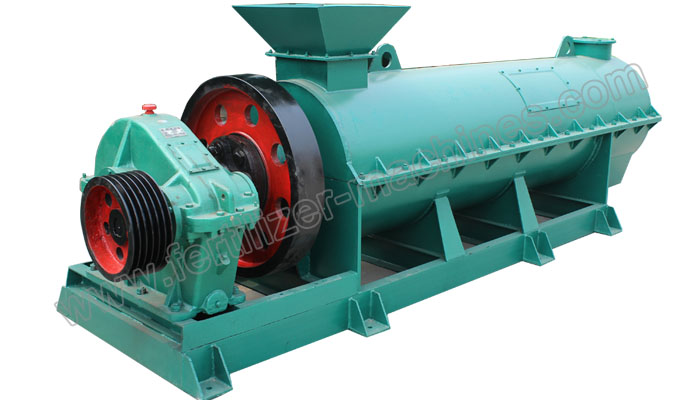
Organic fertilizer granulator is in round configuration to make cylindrical particles a rolling ball, no return, high rate of ball granule, good strength, beautiful and applicable, and hence the machine becomes the ideal equipment of globular particles in organic fertilizer (biological). India is a large agricultural nation, there is lots of organic fertilizer, and many villagers do not know how the rational use of fertilizers, resulting in a lot of waste. So the demand for granulators is big.
We are all know the modern organic fertilizer is produced by organic fertilizer equipment, the organic fertilizer production has been mechanized, large-scale, integrated processing, below we went into the production process of organic fertilizer equipment.
The way of traditional organic fertilizer pelletizing is mainly through the disc for molding. Disc Pelletizer through high speed revolves result the raw materials rolling in balls. On the process of the molding, you need add some water to increase the rate of shaping. So the organic fertilizer pellets would be a little more loose, not hard, easy to broken and out of shape,
This would bring some unnecessary risks on product organic fertilizer.
The organic fertilizer production according to the organic fertilizer functional effects decision, workers then first a variety of raw materials required pulverized into a certain degree of fineness of organic materials, in accordance with Formulation in a blender Hunban, in this process, the key step is proportion to add a 'bio-fermentation agents, Hunban into the fermentation tank, so the area is very small, deep pool aerobic fermentation, the fermentation process without manual saves fermentation costs due to full mechanization production, fermentation so evenly, no dead ends, from the process to ensure product quality organic fertilizer. After one night, the raw material input temperature soon rose up, up to 70 degrees, this time, the staff start turning throwing equipment, at the same time open the blast equipment, to be turned toss after the end of the pond is already fermented finished, new raw materials into the fermentation tank, and so the cycle.
Organic fertilizer granulator equipment to show the production process, to understand and know how it carried out the production of organic fertilizer, it helps to fully play its fertilising application of organic manure.
Dewatering screw press machine used to reduce the water content of animal dung, acid-sludge, medicine dregs, kitchen rubbish, and many other dregs. The solid content in the raw material can be 30-40%, and the moisture of final product is about 40%, you can’t press out any water by hands.
Description of Manure Dewatering Machine 1.The development of modern livestock farming, the rise of intensification and factory farming industry has enriched people's material needs. However, it also brought the flooding of livestock sewage which caused the water, air and environment pollution. 2.This animal manure solid liquid separator will separate the original livestock manure to liquid and solid organic fertilizer: the liquid organic fertilizer can be directly used for crops; the solid organic fertilizer can be shipped to regions that lack of fertilizer to improve the soil structure. What's more, after fermentation, the solid organic fertilizer can be made into organic compound fertilizer.
Working Principle of solid-liquid dewatering machine: 1.When the cow manure dewater machine is working, the dung slurry pump will pump the animal manure into the main body of the cow manure dewater machine. 2.In the body of the cow manure dewater machine, there are a screw and screen. As the cow manure enter into the cow manure dewater machine, the screw will pull the manure from the left to the right at the speed of 45 r/min. 3.When cow manure are transported the right of cow manure dewater machine, the screen will continuous press the manure to dewater the manure. 4.The manure is dewatered and discharged by the cow manure dewater machine. 5.The dewatered water from the liquid discharge pipe into the water discharge pool.
Application Scope: 1.Animal wastes, such as pig manure, cow dung, poultry dung, horse excrement and other kinds of animal manure; 2.Biogas slurry, sludge gas and biogas fermentative residue; 3.Manioc waste, tea slag, sweet potato waste, maize pulp, bagasse, medicine dregs, wpp d pulp fiber, paper pulp fiber, bean dregs, coffee grounds and so on; 4.Any kinds of solid liquid separation.
Phase I: Making Mushroom Compost This phase of
compost preparation usually occurs outdoors although an enclosed
building or a structure with a roof over it may be used. A concrete
slab, referred to as a wharf, is required for composting. In addition, a
compost turner
to aerate and water the ingredients, and a tractor-loader to move the
ingredients to the turner is needed. In earlier days piles were turned
by hand using pitchforks, which is still an alternative to mechanized
equipment, but it is labor intensive and physically demanding. Phase
I composting is initiated by mixing and wetting the ingredients as they
are stacked in a rectangular pile with tight sides and a loose center.
Normally, the bulk ingredients are put through a compost turner.
Water is sprayed onto thepig manure or synthetic compost as these
materials move through the turner. Nitrogen supplements and gypsum are
spread over the top of the bulk ingredients and are thoroughly mixed by
the turner. Once the pile is wetted and formed, aerobic fermentation
(composting) commences as a result of the growth and reproduction of
microorganisms, which occur naturally in the bulk ingredients. Heat,
ammonia, and carbon dioxide are released as by-products during this
process. Compost activators, other than those mentioned, are not needed,
although some organic farming books stress the need for an “activator.” Mushroom
compost develops as the chemical nature of the raw ingredients is
converted by the activity of microorganisms, heat, and some
heat-releasing chemical reactions. These events result in a food source
most suited for the growth of the mushroom to the exclusion of other
fungi and bacteria. There must be adequate moisture, oxygen, nitrogen,
and carbohydrates present throughout the process, or else the process
will stop. This is why water and supplements are added periodically, and
the compost pile is aerated as it moves through the turner. Gypsum
is added to minimize the greasiness compost normally tends to have.
Gypsum increases the flocculation of certain chemicals in the compost,
and they adhere to straw or hay rather than filling the pores (holes)
between the straws. A side benefit of this phenomenon is that air can
permeate the pile more readily, and air is essential to the composting
process. The exclusion of air results in an airless (anaerobic)
environment in which deleterious chemical compounds are formed which
detract from the selectivity of mushroom compost for growing mushrooms.
Gypsum is added at the outset of composting at 40 lbs. per ton of dry
ingredients. Nitrogen supplements in general use today
include brewerâs grain, seed meals of soybeans, peanuts, or cotton, and
chicken manure, among others. The purpose of these supplements is to
increase the nitrogen content to 1.5 percent for horse manure or 1.7
percent for synthetic, both computed on a dry weight basis. Synthetic
compost requires the addition of ammonium nitrate or urea at the outset
of composting to provide the compost microflora with a readily available
form of nitrogen for their growth and reproduction. Corn
cobs are sometimes unavailable or available at a price considered to be
excessive. Substitutes for or complements to corn cobs include shredded
hardwood bark, cottonseed hulls, neutralized grape pomace, and cocoa
bean hulls. Management of a compost pile containing any one of these compostable organic materials is unique in the requirements for watering and the interval
between turning. The initial compost pile should be 5
to 6 feet wide, 5 to 6 feet high, and as long as necessary. A two-sided
box can be used to form the pile (rick), although some turners are
equipped with a “ricker” so a box isnât needed. The sides of the pile
should be firm and dense, yet the center must remain loose throughout
Phase I composting. As the straw or hay softens during composting, the
materials become less rigid and compactions can easily occur. If the
materials become too compact, air cannot move through the pile and an
anaerobic environment will develop.
Turning
and watering are done at approximately 2-day intervals, but not unless
the pile is hot (145° to 170°F). Turning provides the opportunity to
water, aerate, and mix the ingredients, as well as to relocate the straw
or hay from a cooler to a warmer area in the pile, outside versus
inside. Supplements are also added when the ricks are turned, but they
should be added early in the composting process. The number of turnings
and the time between turnings depends on the condition of the starting
material and the time necessary for the compost to heat to temperatures
above 145°F.
Water
addition is critical since too much will exclude oxygen by occupying
the pore space, and too little can limit the growth of bacteria and
fungi. As a general rule, water is added up to the point of leaching
when the pile is formed and at the time of first turning, and thereafter
either none or only a little is added for the duration of composting.
On the last turning before Phase II composting, water can be applied
generously so that when the compost is tightly squeezed, water drips
from it. There is a link between water, nutritive value, microbial
activity, and temperature, and because it is a chain, when one condition
is limiting for one factor, the whole chain will cease to function.
Biologists see this phenomenon repeatedly and have termed it the Law of
Limiting Factors.
Phase
I composting lasts from 7 to 14 days, depending on the nature of the
material at the start and its characteristics at each turn. There is a
strong ammonia odor associated with composting, which is usually
complemented by a sweet, moldy smell. When compost temperatures are
155°F and higher, and ammonia is present, chemical changes occur which
result in a food rather exclusively used by the mushrooms. As a
by-product of the chemical changes, heat is released and the compost
temperatures increase. Temperatures in the compost can reach 170° to
180°F during the second and third turnings when a desirable level of
biological and chemical activity is occurring. At the end of Phase I the
compost should: a) have a chocolate brown color; b) have soft, pliable
straws, c) have a moisture content of from 68 to 74 percent; and d) have
a strong smell of ammonia. When the moisture, temperature, color, and
odor described have been reached, Phase I composting is completed.
Phase II: Finishing the Compost There
are two major purposes to Phase II composting. Pasteurization is
necessary to kill any insects, nematodes, pest fungi, or other pests
that may be present in the compost. And second, it is necessary to
remove the ammonia which formed during Phase I composting. Ammonia at
the end of Phase II in a concentration higher than 0.07 percent is often
lethal to mushroom spawn growth, thus it must be removed; generally, a
person can smell ammonia when the concentration is above 0.10 percent.
Phase
II takes place in one of three places, depending on the type of
production system used. For the zoned system of growing, compost is
packed into wooden trays, the trays are stacked six to eight high, and
are moved into an environmentally controlled Phase II room. Thereafter,
the trays are moved to special rooms, each designed to provide the
optimum environment for each step of the mushroom growing process. With a
bed or shelf system, the compost is placed directly in the beds, which
are in the room used for all steps of the crop culture. The most
recently introduced system, the bulk system, is one in which the compost
is placed in a cement-block bin with a perforated floor and no cover on
top of the compost; this is a room specifically designed for Phase II
composting.
The
compost, whether placed in beds, trays, or bulk, should be filled
uniformly in depth and density or compression. Compost density should
allow for gas exchange, since ammonia and carbon dioxide will be
replaced by outside air.
Phase
II composting can be viewed as a controlled, temperature-dependent,
ecological process using air to maintain the compost in a temperature
range best suited for the de-ammonifying organisms to grow and
reproduce. The growth of these thermophilic (heat-loving) organisms
depends on the availability of usable carbohydrates and nitrogen, some
of the nitrogen in the form of ammonia.
Optimum
management for Phase II is difficult to define and most commercial
growers tend toward one of the two systems in general use today: high
temperature or low temperature.
A
high temperature Phase II system involves an initial pasteurization
period during which the compost and the air temperature are raised to at
least 145°F for 6 hours. This can be accomplished by heat generated
during the growth of naturally occurring microorganisms or by injecting
steam into the room where the compost has been placed, or both. After
pasteurization, the compost is re-conditioned by immediately lowering
the temperature to 140°F by flushing the room with fresh air.
Thereafter, the compost is allowed to cool gradually at a rate of
approximately 2° to 3°F each day until all the ammonia is dissipated.
This Phase II system requires approximately 10 to 14 days to complete.
In
the low temperature Phase II system the compost temperature is
initially increased to about 126°F with steam or by the heat released
via microbial growth, after which the air temperature is lowered so the
compost is in a temperature range of 125° to 130°F range. During the 4
to 5 days after pasteurization, the compost temperature may be lowered
by about 2°F a day until the ammonia is dissipated.
It
is important to remember the purposes of Phase II when trying to
determine the proper procedure and sequence to follow. One purpose is to
remove unwanted ammonia. To this end the temperature range from 125° to
130°F is most efficient since de-ammonifying organisms grow well in
this temperature range. A second purpose of Phase II is to remove any
pests present in the compost by use of a pasteurization sequence.
At
the end of Phase II the compost temperature must be lowered to
approximately 75° to 80°F before spawning (planting) can begin. The
nitrogen content of the compost should be 2.0 to 2.4 percent, and the
moisture content between 68 and 72 percent. Also, at the end of Phase II
it is desirable to have 5 to 7 lbs. of dry compost per square foot of
bed or tray surface to obtain profitable mushroom yields. It is
important to have both the compost and the compost temperatures uniform
during the Phase II process since it is desirable to have as homogenous a
material as possible.

 The
pilot plant will take in digestate and process it via chemical
hydrolysis, followed by a high-efficiency organic fertilizer granulation process.
The
pilot plant will take in digestate and process it via chemical
hydrolysis, followed by a high-efficiency organic fertilizer granulation process.